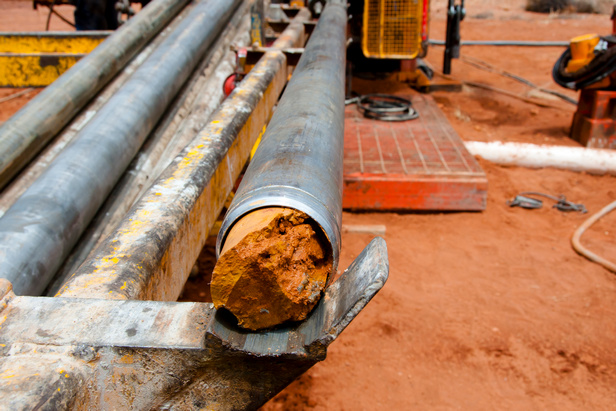
This is becoming a recurring issue on many projects across the UAE and the Middle East. A client receives a poor geotechnical interpretative report that initially looks like a bargain (often included as a complementary service with the ground investigation), but later turns into a significant burden during foundation design, authority approvals, and construction.
Whether your project is in Dubai, Abu Dhabi, Qatar, Saudi Arabia or elsewhere in the region, the quality of your soil interpretation can have a major impact on design efficiency, project cost and schedule.
Here are a few red flags that should make you question whether your interpretative report belongs on your desk or in the bin:
- No statistical analysis. Design parameters should be supported by the measured and collected data, not selected arbitrarily. Statistical evaluation of laboratory and field testing is essential.
- No interpretative ground model. The report should present a clear, simplified soil interpretative profile derived by combining all available exploration methods, including boreholes, CPTs, laboratory testing, and geological interpretation. This simplified ground model is often essential for carrying out engineering calculations.
- No methodology. Correlations, assumptions, engineering judgement, and calculation procedures should be clearly documented. Anyone reviewing the report should be able to follow the methodology and verify the calculations and recommendations.
- Single-value recommendations. This is probably the easiest red flag to identify and unfortunately the one we see most often. A single bearing capacity of 200 kPa or a subgrade modulus of 18 MN/m³ is rarely useful or correct. These parameters depend on foundation dimensions, embedment depth, loading conditions, groundwater conditions, and settlement criteria. Without this context, these recommendations have limited engineering value and can often hinder your approval process instead of helping it.
The right foundation recommendations can be invaluable. The wrong ones will almost always come back to haunt you—when your calculations are challenged, your design requires rework, authority reviewers ask for justification, approvals are delayed, and your project schedule is on the line.
A good geotechnical interpretative report should not simply provide design parameters. It should provide the engineering rationale behind them. In today's projects across the Middle East, transparency, traceability and technical justification are no longer a luxury, they are becoming the expectation.