Orycta’s lessons learned from helping clients choose the right soil investigation partners
Anyone working in the United Arab Emirates (UAE) or GCC knows that our ground conditions are anything but straightforward. We often deal with medium-dense to dense sands transitioning into sandstone or calcarenite, with varying degree of cementation. It’s that grey zone between soil and very weak rock that makes interpretation and design so challenging.
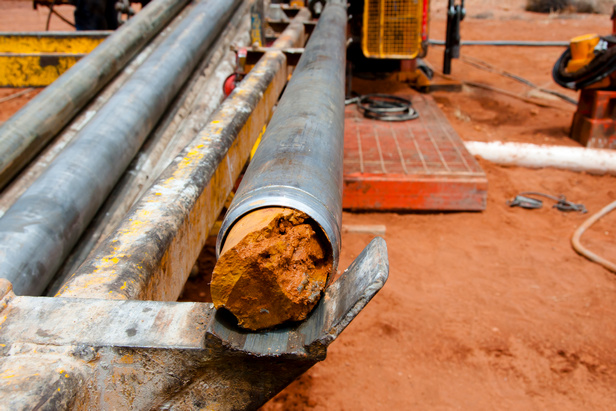
When it comes to standard site investigations, like boreholes, SPTs, and basic coring, most contractors can deliver decent results. But once you step into advanced testing like pressuremeter or advanced tests, geophysical investigations or even CPTs, the difference between an average and a great soil investigation company becomes very clear.
At that level, data quality, rig condition and maintenance, calibration, operator skill, and interpretation experience directly influence the geotechnical parameters that feed into your foundation design. Even small errors in core recovery or a poor understanding of cementation or stiffness transitions, can lead to major misjudgments in foundation behavior, settlement, or retaining wall performance. Details that can lead to significant overdesign and costly project delays later into to the project, when time is precious.
And here’s a truth we’ve seen time and again across projects in Dubai, Abu Dhabi, Riyadh, and Doha:
You’ll always pay for your soil investigation!
Either upfront, by choosing a competent and experienced team or later, through redesigns, claims, delays, and costly surprises during construction.
As with almost everything nowadays, the cheapest option is rarely the best investment.
High-quality geotechnical investigations in the UAE and GCC don’t just produce better data. They reduce uncertainty, optimize design, and enhance safety, things that eventually would directly impact your project’s budget, schedule and success.
Perhaps it’s also time for municipalities and authorities to consider setting minimum standards for rig quality, calibration, and operator competence, similar to what’s already in place in the UK, Singapore, and Hong Kong.
After all, reliable design starts with reliable data, and that begins in the field.